



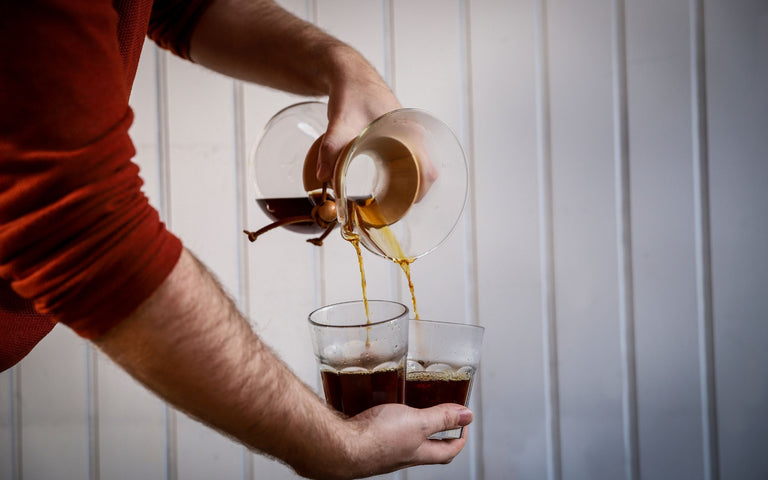
Your cup of coffee is made up of around 98% water and just 2% coffee. Because of this, getting water right is a far bigger deal than most people realise. So much so, in fact, that some companies produce mineral sachets designed to be added to distilled water to create the perfect brewing water.
We love an experiment, so we decided to take a closer look at water. We tested distilled water, bottled water, tap water and recipe water — distilled water enhanced with carefully selected minerals.
We even took the experiment on the road to Manchester Coffee Festival. Many coffee professionals were surprised to learn that the coffees they were tasting were identical, and that it was only the water making the difference. Water had a huge impact on clarity of flavour, acidity and body.
In brief, distilled water produced extremely dull-tasting coffee due to the lack of minerals to aid extraction. Tap water varies widely depending on location, making its mineral content unpredictable, and the chlorine commonly found in tap water negatively affects flavour.
Bottled water can be a solid option, and recipe water — although it takes more effort to prepare — delivered consistently impressive results.
What surprised us most was how significant the jump was from bottled water to recipe water. We expected bottled water to outperform tap water, but the improvement from bottled to recipe water was just as noticeable.
Water Jugs – Yay or Nay?
In short, it depends on your local water hardness and the type of jug you choose. The most popular filters for home brewing are from the Brita range, whether as a plumbed‑in system or a water jug .
All of these use activated carbon to remove chlorine, which is a very positive first step. Chlorine dulls flavour and can add a chemical edge to your coffee .
Higher-quality jugs also include some form of remineralisation. If you’re using a jug and want the best-tasting coffee, models that remineralise are generally preferable — particularly in soft water areas.
That said, most jugs cannot be adjusted to suit your local tap water. The exception is Peak Water , which uses a dual-ion system to hold back a controlled amount of minerals and prevent over-mineralisation. A carbon filter removes unwanted organic compounds at the same time.
If you live in a hard water area, we highly recommend this jug. It allows you to adjust filtration based on local water hardness, with testing strips included to help you find the correct setting.
Bottled Water
One bottled water is often considered close to ideal for brewing coffee — Tesco Ashbeck. Its pH level and mineral content help produce well-extracted coffee with excellent flavour clarity.
However, bottled water is not the most environmentally friendly option. If you go down this route, choose the largest bottles available to reduce plastic usage relative to water volume, and reuse containers where possible before recycling.
You can also bring an empty bottle to a local café and politely ask if they’d refill it with filtered water. Be sure to tip, as water filtration systems are costly for cafés. Sampling café water is a great way to experience how different water profiles affect flavour.
Filtered Water Systems
The most comprehensive option is installing a home filtration system. Commercial filters last much longer than jug filters, typically needing replacement only twice a year. They also offer more control over mineral content.
The downside is upfront cost and installation effort, but for many serious home brewers, the long-term benefits can outweigh this — especially when paired with consistently fresh beans, such as those delivered via a coffee subscription .
We hope you’ve enjoyed exploring water filtration options with us.